
What refractory materials are used in the top, wall, bottom and tapping port of electric arc furnaces used for steelmaking?
Electric Arc Furnace Steelmaking: Electric arc furnaces use the arc generated between the electrode tips and the charge as heat energy to produce steel. The development of electric arc furnace technology has evolved based on the use of high-power DC electric arc furnaces, bottom gas supply and stirring, and bottom tapping. An electric arc furnace consists of a roof, walls, bottom, and tapping chute.
1.Refractory materials for electric arc furnace roof
Electric arc furnace roofs are commonly constructed with high-alumina bricks, with an alumina content between 75% and 85%. Compared to silica bricks, high-alumina bricks are characterized by high refractoriness, excellent thermal shock resistance, and high compressive strength. Due to abundant domestic bauxite resources, high-alumina bricks have become the primary refractory material for electric arc furnace roofs, with a lifespan approximately 2-3 times that of silica brick roofs. With the development of large, ultra-high-power electric furnaces, the service life of high-alumina bricks has also decreased, leading to the further use of alkaline bricks such as fired or unfired magnesia bricks and magnesia-chrome bricks. Alternatively, precast refractory components can be hoisted from commercially available cast refractory parts. Compared to conventional masonry furnace roofs, these offer advantages such as ease of construction, improved integrity, enhanced resistance to arc radiation, and resistance to rapid cooling and heating.
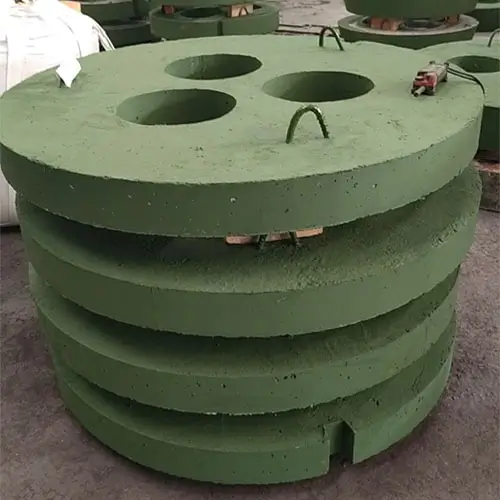
2.Refractory materials for furnace walls
The furnace wall is divided into the general furnace wall, the slag line area, and the hotspot area near the arc. Magnesia bricks, dolomite bricks, and periclase bricks are commonly used for general furnace wall construction. Unburned magnesia basic bricks and asphalt-bonded magnesia and dolomite ramming materials are also used. Magnesia-chrome bricks and high-quality magnesia bricks are used for the walls of ultra-high power electric arc furnaces or those used for smelting special steels.
The slag line area and hotspot areas are the weakest links in the furnace wall. Because the lifespan of the furnace wall depends primarily on the extent of damage to the hotspot area, the lining in these areas requires special attention. Magnesia-chrome bricks were often used in the early days, with a lifespan of 100-250 heats. Magnesia-carbon bricks are now widely used, demonstrating excellent high-temperature and slag resistance. Their lifespan has been significantly improved, reaching over 300 heats. In order to balance the damage to the furnace wall and extend its service life, the furnace wall is also equipped with a water-cooling box or water-cooling jacket. A layer of refractory coating is sprayed on the inner surface to form a protective layer for the slag, which can effectively reduce the unit consumption of refractory materials, but the corresponding energy consumption increases.
3.Refractory materials for furnace bottom
The furnace bottom and bank slopes form the melt pool, where the charge and molten steel converge. After the furnace bottom lining reacts with slag and iron oxide to form a metamorphic layer, it can become loose during reduction due to the reduction of certain components within it, often causing flotation due to intrusion of molten steel. Therefore, the masonry or knotted lining in this area should feature uniform overall performance, tight masonry, excellent high-temperature performance, high strength, corrosion resistance, erosion resistance, thermal shock resistance, and volume stability.
The knotted lining should be constructed using high-quality magnesia or fused magnesia. During construction, attention should be paid to the interlocking and interlocking of each layer, ensuring uniform thickness and density. Below the ramming layer are the working layer and permanent lining. The working layer is constructed using tar-asphalt-bonded magnesia bricks, while the permanent lining is typically constructed using magnesia bricks. At the slag line above the bank slope, where slag erosion is severe, lining bricks similar to or similar to those used in the hot spots of the furnace wall are often used, such as fused-cast magnesia-chrome bricks or re-bonded magnesia-chrome bricks. Magnesia-carbon bricks are preferred.
4.Refractory materials for tapping holes
The current eccentric tapping method uses a fixed furnace body instead of a tilting one, with a tapping port located eccentrically at the bottom of the furnace, replacing the tapping chute. This method eliminates tilting equipment, expands the water-cooled wall area, mitigates lining damage, and appropriately reduces tapping temperatures and time, thereby reducing costs. The eccentric tapping port bricks are pitch-impregnated and fired magnesia bricks, the tube bricks are magnesia-carbon bricks with a resin-bound carbon content of 15%, and the end bricks are magnesia-carbon bricks with a resin-bound carbon content of 10%-15%, or ALO-C-SiC bricks with a resin-bound carbon content of 15%. To ensure smooth tapping, coarse sand with an olivine matrix is often used as a drainage material.
