
Electric arc furnaces and converters differ significantly in terms of raw materials, furnace temperature, smelting cycle, and single-furnace size.
(1) Electric arc furnace
Advantages: It allows for the secondary utilization of alloying elements in scrap steel; the high temperature of the electric arc can melt refractory alloying elements; and it allows for precise control of the furnace temperature. As mentioned earlier, electric arc furnaces use scrap steel as their main raw material, thus enabling the secondary utilization of alloying elements in the scrap steel. The electric arc furnace utilizes the heat generated by the electric arc between the graphite electrode and the iron charge to melt the iron. The arc temperature exceeds 3000℃, allowing the electric arc furnace to smelt refractory alloying elements. Simultaneously, by precisely adjusting the current, the furnace temperature can be controlled for extended periods, ensuring accurate temperature control of the molten steel. Furthermore, the electric arc furnace process is highly flexible and can meet the requirements for smelting small batches/multiple varieties of special steels.
Disadvantages: Steel quality is significantly affected by scrap steel, the smelting cycle is long, and electricity consumption is high. As mentioned earlier, electric arc furnaces use scrap steel as the main raw material, which may introduce more impurities into the molten steel during the smelting process, resulting in lower steel quality. According to our in-depth report “Carbon Industry Special Report I: Carbon for Steel (I) – New Electric Furnace Deployment Drives Demand for Graphite Electrodes, Technological Progress and Increased Concentration Promote Long-Term Development” published on June 25, 2017, the average tapping time of the widely used fourth-generation electric furnace is 55-60 minutes, and the smelting cycle is longer than that of converter steelmaking; electricity consumption is 500 kWh/t, which puts significant pressure on the local power grid.
(2) Converter
Advantages: Higher steel purity, shorter smelting cycle, and lower power consumption. As mentioned earlier, converters use molten iron produced by blast furnaces as the main raw material, resulting in higher purity steel with fewer impurities and alloying elements. The converter steelmaking process relies entirely on the chemical and physical heat generated by the oxidation of molten iron, requiring no external energy input, thus leading to lower power consumption. The smelting cycle is 20-30 minutes, shorter than that of electric arc furnace steelmaking, allowing for a faster production pace.
Disadvantages: The furnace temperature is relatively low, making it unsuitable for melting refractory alloying elements; the large furnace volume results in poor process flexibility. Since converter steelmaking relies entirely on the chemical and physical heat generated by the oxidation of molten iron without external energy input, the converter temperature is typically below 2000℃, making it unsuitable for smelting refractory alloying elements. Large converters typically have a capacity of over 200 tons; the No. 1 and No. 2 converters at Baosteel’s Zhanjiang steel base have a capacity of 350 tons, making them the largest converters in China. However, the large furnace volume also results in a large volume of molten steel per furnace, leading to poor smelting flexibility and making it unsuitable for smelting small batches of multiple steel grades.
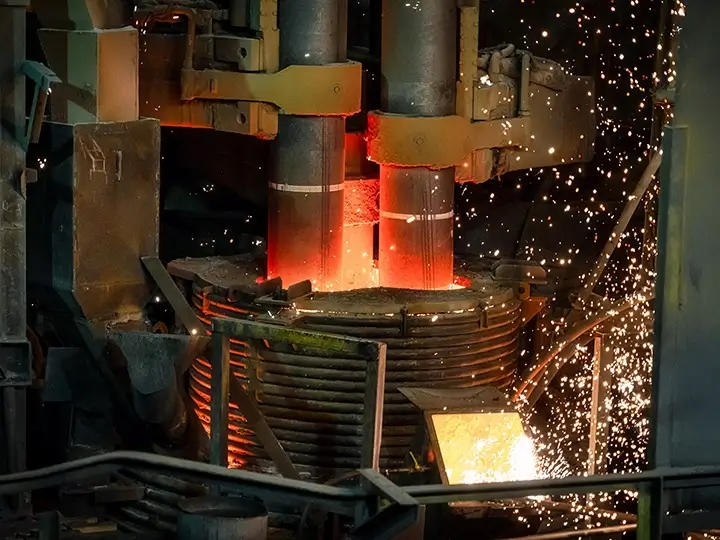
What is the electric arc furnace?
An electric arc furnace (EAF) is defined as a type of furnace used for melting and refining steel and other metals, characterized by the formation of an electric arc between graphite electrodes and the scrap metal.
What is the difference between BOF and EAF?
While EAF steelmaking relies on electricity and recycled metals, Blast Furnace/BOF depends on raw materials like Iron Ore and Metallurgical Coke as part of a process where oxygen is blown into the furnace at a high velocity.
What are the benefits of electric arc furnace?
The electric arc furnace steelmaking process is built around recycling scrap steel and modifying its chemistry to a variety of steel grades to produce new prime steels. This circular process minimizes waste, conserves resources and lowers the environmental impact of steel production.
How does the EAF work?
An EAF melts scrap steel using a powerful electric arc generated between electrodes and the raw materials. Oxygen is blown into the furnace to purify the steel. Scrap is generated by consumers (for example food cans and aerosols) and manufacturers that process steel and make steel products.
What is the purpose of converter in steel production?
A Converter in the steel industry is a large, specialized metallurgical vessel used primarily for converting molten iron (hot metal) into steel by refining processes that remove impurities and adjust chemical composition.
What is the main purpose of a converter?
A converter is an electrical device that modifies the form of an electrical power source. Its primary function is to convert voltage, either stepping it up (increasing voltage) or stepping it down (reducing voltage), depending on the requirement.
How does a steel converter work?
Since iron is brittle and not easily formable it has to be turned into steel in a second step. This takes place in a basic oxygen furnace, also called a converter. Converters can hold up to 400 tonnes of hot metal. In a converter, oxygen is blown onto the liquid iron to burn unwanted elements.
What are the three types of furnaces for producing steel?
The three main types of furnaces used to produce steel are the integrated blast furnace (BF) and basic oxygen furnace (BOF) as well as the electric arc furnace (EAF) and electric arc furnace direct reduced iron (DRI).
