
In continuous casting operations, the stable use of the ladle nozzle, tundish stopper rod, and submerged entry nozzle is crucial for achieving high-reliability continuous casting. Among these, the tundish stopper rod mainly faces issues such as inclusion adhesion at the rod head and stopper rod erosion. Inclusion adhesion can be effectively resolved through slag-forming process optimization and calcium treatment, making stopper rod erosion a key factor affecting stable continuous casting operations. Relevant literature primarily studies the causes and control of erosion at the stopper rod head, with limited research on the slag line area. This paper, combining relevant literature review and analytical methods, analyzes the influencing factors of slag line erosion in aluminum-containing steel production and proposes relevant control measures.
Analysis of the causes of stopper rod erosion
1.1 Material and Steel Type of Stopper Rod
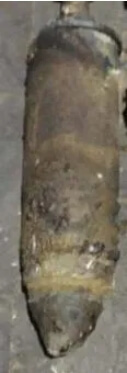
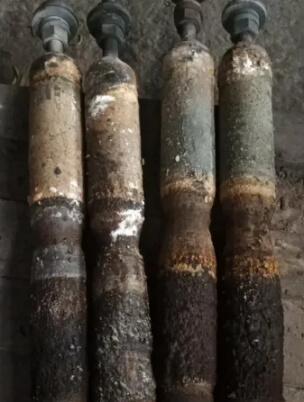
Currently, all stopper rods used are made of aluminum-carbon (Al2O3-C), as shown in Table 1. Erosion of the slag line area on the stopper rods is common during the production of low-silicon aluminum-killed steel, especially in the production of low-carbon, low-silicon aluminum-killed steels such as ML08Al and XGM6-1, where the finished carbon content is below 0.10%. In severe cases, the erosion rate can reach 80%, causing the stopper rod to break off at the slag line and disrupting production.
1.2 Erosion reaction mechanism at the slag line
The Marangoni effect plays a significant role in the localized erosion of refractory materials at the steel-slag interface. In actual production, the slag line of carbonaceous refractory materials experiences fluctuations at the slag-steel interface due to interfacial tension, leading to localized erosion of the slag line material, as shown in Figure 2. Since the stopper rod itself is in continuous up-and-down reciprocating motion within the tundish, this further exacerbates the erosion at the slag line.
Inside the tundish, to prevent direct contact between molten steel and air and to prevent secondary oxidation of the molten steel, a covering agent is added to the surface of the molten steel for protection. At this time, a temperature gradient is generated in the tundish, causing convection between the molten steel and slag at the slag line, increasing the scouring of the stopper rod slag line area. This micro-circulation caused by convection at the slag-steel interface will exacerbate the corrosion of the refractory material.
1.3 Molten steel corrodes the stopper rod
When producing low-carbon, low-silicon aluminum-killed steel with a carbon content below 0.10%, aluminum is used for deoxidation and killing. The molten steel undergoes calcium treatment before casting. During this process, carbon from the stopper rod seeps into the molten steel, forming a decarburized layer. Simultaneously, the calcium treatment significantly increases the CaO content in the molten steel. Besides the modification of Al2O3 in the molten steel, the excess [Ca] and [CaO] react with Al2O3 in the stopper rod matrix to form a large amount of low-melting-point calcium aluminates, primarily 12CaO·7Al2O3 and CaO·Al2O3, which flow into the molten steel and slag, causing erosion, as shown in Figure 3. The main reaction mechanisms are as follows:
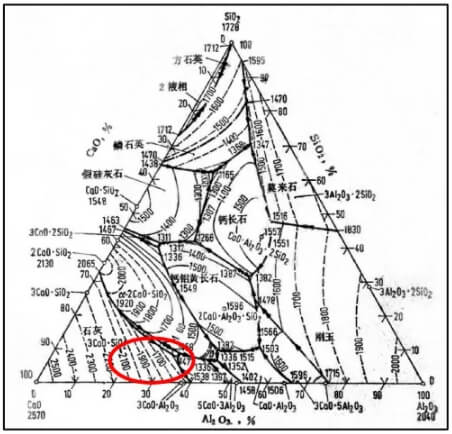
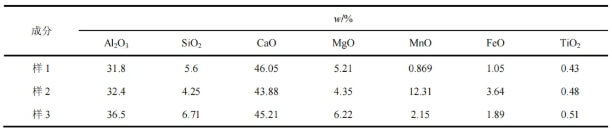
In actual production, even when the Al content in the molten steel was controlled at 0.045% and the calcium content at 0.010%, erosion still occurred. Through on-site monitoring, it was found that the erosion at the slag line was mainly caused by the reaction between the CaO component in the slag layer of the tundish casting zone and the Al2O3 in the stopper rod matrix, resulting in the same erosion phenomenon.
Slag samples from the tundish casting zone were taken for testing and analysis; the main components are shown in Table 2.
1.4 Effect of Tundish Temperature on Slag Line Erosion
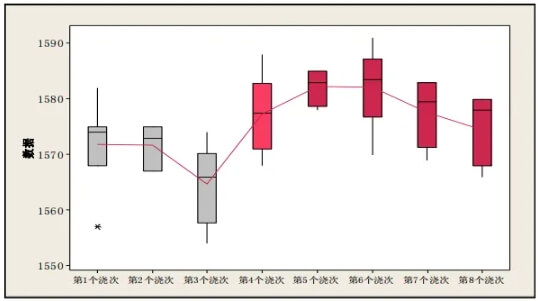
The XGM6-1 ultra-low carbon steel produced by the steel mill suffered from the most severe slag line erosion problem in the stopper rods. Figure 4 shows the correlation between tundish temperature and slag line erosion. In the first three castings, the average tundish temperature was controlled between 1567 and 1575℃, resulting in relatively mild slag line erosion and no breakage. However, in the latter five castings, the average tundish temperature was controlled between 1577 and 1583℃, and slag line erosion and breakage occurred in all of them.
2.1 Strictly control the slag discharge from the large slag container.
The slag composition in the tundish casting area mainly originates from ladle refining slag, tundish covering agent, and inclusions from molten steel that float to and incorporate into the slag layer. Among these, the low-silicon, low-alumina killed steel refining slag, which suffers significant stopper rod erosion, is a high-basicity refining slag system, with a CaO content controlled between 55% and 65%. Slag from the ladle in each heat accumulates as refining slag in the tundish casting point area. During the transfer process and when the initial pouring flow impacts the slag surface in the casting point area, this refining slag enters the casting area and erodes the stoppers.
Therefore, it is crucial to strictly control ladle slag inflow, using automatic slag detection to prevent excessive slag inflow at the end of the pouring process. Simultaneously, tundish slag removal operations should be implemented. When the ladle has continuously poured 5-7 heats of molten steel, a tundish slag removal operation should be performed by raising the liquid level to control the slag layer thickness in the casting point area.
2.2 Controlling the superheat of the tundish
The liquidus temperature of XGM6-1 steel is 1535℃, and the superheat is controlled between 25 and 45℃. In actual production, when the average superheat in the tundish reached 45℃ (tundish temperature 1580℃), slag line erosion occurred in all cases. Reducing the average superheat in the tundish by 15℃, and actually controlling the average tundish temperature to approximately 1560-1565℃, significantly improved the slag line erosion situation. The slag line erosion rate of the stopper rod could be stably controlled below 20%, as shown in Figure 5.
2.3 Optimize the composition of the molten steel covering agent in the tundish
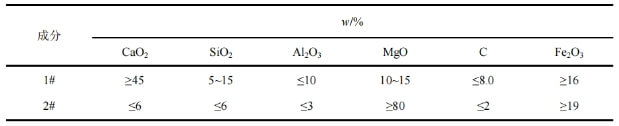
To address the reaction between the tundish slag and the stopper rod slag line, and the unavoidable issues of refined slag entering the casting zone and excessive tundish superheat during actual production, the composition of the tundish steel covering agent was optimized. The MgO content in the covering agent was increased to accommodate different steel grades and tundish temperatures, forming a Mg-Ca-Al-Si multi-component compound within the tundish slag layer. This compound has a melting point above 1600℃ and forms a protective layer at the stopper rod slag line, mitigating the erosion of the rod refractory material by the tundish slag.
The MgO content in the covering agent needs to be adjusted based on the actual tundish temperature range. When the MgO content exceeds 15%, the melting point of the tundish slag increases significantly. For steel grades with tundish temperatures below 1560℃, this can cause slag crusting in the tundish casting zone, affecting normal stopper rod control. The amount of covering agent added is controlled to maintain a dark surface on the tundish steel surface. The actual covering agent composition is shown in Table 3.
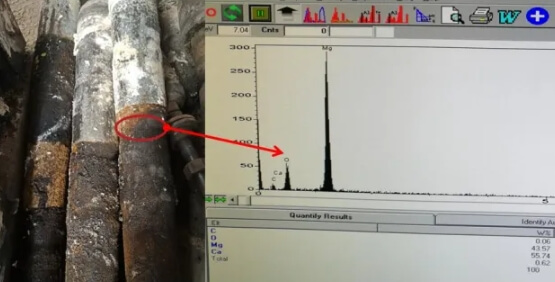
By optimizing the composition of the core cover agent, a high-melting-point compound layer primarily composed of MgO is formed at the slag line of the plug rod, as shown in Figure 6. This layer inhibits the erosion of refractory materials at the slag line caused by reactions at the slag-steel interface, effectively extending the service life of the plug rod.
Conclusion
(1) By reducing the superheat of molten steel in the intermediate ladle by 15°C, the erosion rate of the stopper rod slag line for XGM6-1 steel grades can be stably controlled below 20%.
(2) Strictly controlling slag discharge from the large ladle and adopting intermediate ladle liquid level raising slag removal operations to discharge refined slag concentrated in the pouring point area reduces the entry of refined slag into the pouring zone, thereby decreasing the CaO source in intermediate ladle slag.
(3) Increasing the MgO content in the ladle cover agent to over 10% slows erosion of refractories at the slag line. Adjusting MgO content to over 80% prevents slag line erosion at the tap hole and extends tap hole service life.
