
Steel ladle linings can be divided into integral linings and brick linings. The former mainly uses Al2O3 raw materials (natural sintered bauxite) and synthetic Al2O3 (white fused alumina, sub-white fused alumina and tabular Al2O3, etc.) and is supplemented with Sp, MgO, etc., to produce so-called Al2O3 low-cement (LCC) or ultra-low-cement (ULCC) refractory castables containing MgO.
To further improve corrosion resistance, basic refractory castables have been studied in recent years. However, except for some special applications, basic refractory castables are still in the experimental research stage. Although problems such as MgO hydration, bonding system, and residual shrinkage have been largely controlled, issues such as slag penetration, slag adhesion, and structural spalling still limit the application of basic refractory castables in steel ladles. Brick linings are mainly constructed using neutral bricks (high-alumina bricks, Al2O3-MgO-C bricks, etc.) and MgO-C bricks.
Due to differences in refining processes, operating conditions, and refractory material design philosophies, the linings of steel ladles vary significantly in different steel plants and regions. Therefore, this paper analyzes the morphology of refractory materials used in the low-corrosion zone of refined steel ladles.
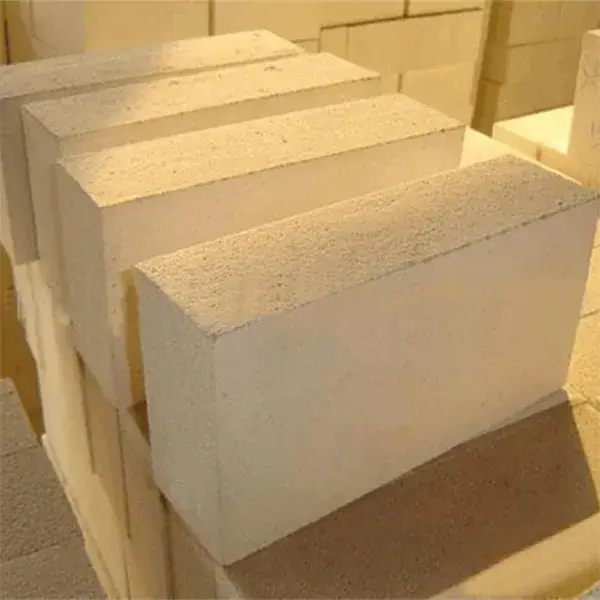
Refractory materials for low corrosion zones
When refractory castables are used in low-corrosion zones such as the sidewalls and bottom of the refining ladle, fused alumina, tabular Al2O3, and alumina-rich Sp (76A or 90A) are typically used as the main raw materials, designed according to LCC and ULCC schemes. This allows for the production of refractory materials with high refractoriness, high slag erosion resistance, and good thermodynamic stability. At low temperatures, the alumina-rich Sp releases excess alumina, which reacts with calcium oxide in the slag to form CaO·6Al2O3, accompanied by an increase in volume. Furthermore, the presence of MnO and FeO in the dissolved slag leads to increased viscosity, thereby improving slag resistance. The appropriate Sp addition amount is 15%–30% (mass fraction), with a corresponding magnesium oxide content of 4%–10% (mass fraction).
To further improve the slag penetration resistance of refractory castables, a magnesia-based refractory castable scheme is adopted. This scheme utilizes the in-situ Sp generation from the MgO + Al₂O₃ → Sp reaction at high temperatures, accompanied by a volume increase (approximately 15%), which compensates for volume shrinkage during sintering and increases the material’s structural density. A small amount of ufSiO₂ is added to promote Sp formation while controlling the expansion of the refractory castable to meet application requirements. For the thermal expansion of magnesia-alumina refractory castables, CA (calcium carbonate) can be used for control.
Constructing high-alumina bricks in the low-corrosion zone of a refined steel ladle is another solution. Modern refined steel ladles use high-alumina bricks produced from natural andalusite and bauxite, which have higher purity and thermomechanical stability (e.g., hot strength) compared to bauxite. However, due to their higher SiO2 content, they exhibit poor corrosion resistance, especially under alkaline slag conditions. High-alumina bricks produced primarily from bauxite clinker, used for lining refined steel ladles, suffer from the following drawbacks and are being phased out:
—Volume shrinkage leads to severe penetration and erosion by molten steel and slag, particularly forming a thick slag layer at the brick joints.
—The inherent brittleness and microstructure of the bricks cause the ladle lining to form a thick erosion zone and slag layer.
—The inherent wettability of the lining to molten steel and slag exacerbates slag erosion and penetration, resulting in flaking.
To overcome the aforementioned shortcomings of high-alumina bricks used as linings in refining ladles, magnesia-alumina-carbon bricks and Al2O3-Sp-C bricks were developed as replacements. Compared to high-alumina bricks, the former has the following advantages:
- Good high-temperature resistance and resistance to spalling;
- Good resistance to erosion by molten steel and slag;
- Good residual expansion; even at higher temperatures, cracks do not appear at the brick joints.
This is because high-alumina bricks exhibit significant shrinkage at temperatures above 1650°C, leading to the penetration of molten steel and slag into the brick joints. Unlike high-alumina bricks, Al2O3-MgO-C bricks do not shrink within the continuous casting tapping temperature range (1650–1670°C).
Comparative slag resistance tests conducted using the rotary impregnation method on high-alumina bricks, magnesia-alumina-carbon bricks, and magnesia-carbon bricks revealed that high-alumina bricks exhibited severe erosion and penetration, while magnesia-carbon bricks showed the least erosion and penetration, with magnesia-alumina-carbon bricks falling in between. Field application also demonstrated that magnesia-alumina-carbon bricks have a longer service life than high-alumina bricks, thus they are widely used as refractory materials for the lining of low-corrosion zones in refining ladles.
The basic bricks used for the brick-lined low-corrosion zones of refining ladles are primarily magnesia-calcium bricks and magnesia-carbon bricks. To prevent hydration of fired dolomite bricks, they can be impregnated with organic substances to reduce their apparent porosity to below 10%, which can be removed during the preheating process before ladle use. Magnesium oxide-rich dolomite bricks are used between the slag line and the molten steel line to reduce wear in this area. One advantage of using dolomite bricks in ladles is their reactivity with molten steel; the dolomite brick lining, serving as the reaction zone of the refining ladle, has a large contact surface with the bricks. However, the wear rate of dolomite brick steel ladle lining is generally higher than that of magnesia-carbon bricks or magnesia-alumina-carbon bricks.
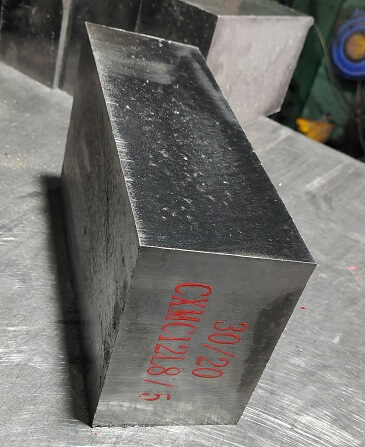
When magnesia-carbon bricks are used as linings for the side walls of refining steel ladles, their carbon content is generally below 15%. For magnesia refractories, carbon is indispensable to improve the brick’s resistance to thermal spalling and affects the high thermal expansion properties of magnesia. Adding carbon to magnesia bricks can improve slag resistance, but it results in lower oxidation resistance. Typically, the problem of easy oxidation of magnesia-carbon bricks is overcome by adding antioxidants.
Adding metallic antioxidants to magnesia-carbon bricks increases thermal conductivity (by 10-15 W/(m·K), leading to excessive heat loss from the molten steel. Therefore, for refining ladles with full-wall (slag line and metal line) magnesia-carbon linings, an insulation layer needs to be considered.
Furthermore, trial results show that magnesia-carbon bricks also perform well in areas subjected to steel impact. However, when using carbon-containing refractories throughout the ladle, magnesia-carbon bricks with a carbon content below 10% (mass fraction) are optimal from the perspective of temperature and inclusions. However, in this case, the accelerated damage due to spalling caused by low carbon content should be considered.
