
Prior to the 1980s, for over three decades, the production of sintered magnesia nationwide was primarily undertaken by the former Anshan Iron and Steel Group’s Dashiqiao Magnesite Mine. The facility successively employed vertical kilns with capacities of 25 cubic meters, 32 cubic meters, 40 cubic meters, 47 cubic meters, and 55 cubic meters. Using coke as fuel and lump magnesite as raw material, the process employed a single-stage calcination method with manual discharge to produce heavy-burned magnesia with 92% MgO content. This supplied the raw material for bricks used in open-hearth steelmaking furnaces nationwide.
The drawbacks of this process are: low ore utilization, with fine-grained ore unable to be processed; high impurity content, where ash in coke contaminates magnesia, increasing its SiO₂ and Al₂O₃ content while limiting MgO content to only 92%; Poor continuous operation capability: Large magnesite lumps decompose upon heating, producing fine particles that adhere to kiln walls. Material inside the kiln tends to form “clumps,” frequently disrupting material flow and thermal conditions within the kiln. This leads to frequent shutdowns and prevents mechanized operation.
Magnesia exhibits low density. Magnesite decomposes in the preheating zone of the kiln, releasing CO₂ to form light-burned MgO. However, the “mother salt illusion” of MgCO₃ persists, hindering further densification of the magnesia. The bulk density of sintered magnesia ranges only between 3.0 g/cm³ and 3.1 g/cm³. Severe environmental pollution occurs as magnesite decomposition releases substantial CO₂ and combustion fumes, which carry fine coke particles and calcined dust out of the kiln, polluting the environment. Controlling high-temperature flue gas poses significant challenges.
Currently, China’s calcined magnesia is still primarily produced using grade II and III ores in solid-fuel vertical kilns. The magnesia contains 90% to 92% MgO, with a bulk density exceeding 3.10 grams per cubic centimeter. Heavily calcined magnesia serves as the primary raw material for producing standard magnesia-based fired bricks and unshaped refractory materials. Liaoning Province currently estimates an annual output of 2.5 million tons. Given its ability to utilize grade-three ore, low product cost, and existing market demand, phasing out this process remains challenging at present.
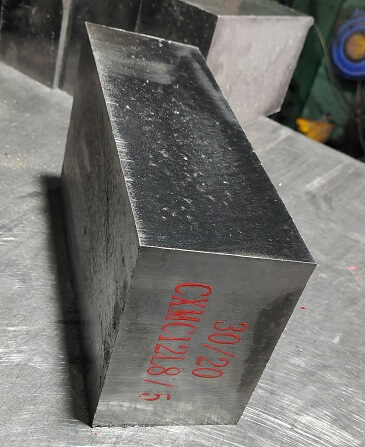
More details about Magnesia
What is the difference between magnesium and magnesia?
Magnesia is magnesium oxide (MgO), a compound. Magnesium is a chemical element (Mg), a metal.
What kind of material is magnesia?
Alkaline earth metal oxide.
Magnesia or magnesium oxide is an alkaline earth metal oxide. The majority of magnesium oxide produced today is obtained from the calcination of naturally occurring minerals. Magnesite, MgCO3, being the most common.
What is magnesia powder?
Magnesia is an air hardening binding material. Its major component is magnesium oxide (MgO) which is a kind of white or yellow powder, belonging to magnesia cement materials.
