
The function of the seating block for the porous plug is to protect the plug core; if the seating block cracks during use, it fails to effectively protect the core and compromises its service life, potentially leading to a steel breakout in severe cases. Beyond issues with the seating block’s inherent quality, external factors also play a critical role in the cracking of these blocks.
The refractory design of the seating brick itself is unreasonable
Issue: The seating brick exhibits poor thermal shock resistance, leading to cracks and fractures during service, which results in steel leakage.
Cause: The refractory material design is suboptimal, resulting in poor thermal shock stability.
Corrective Measures:
- Adjust the material composition of the porous seating brick to enhance thermal shock performance;
- Appropriately increase the steel fiber content; this yields significant improvements, particularly for ladles with slower turnover rates.
External factors caused the purging plug seating block to crack and leak steel
1.The bottom opening for the installation of the monolithic porous plug is too large
Issue: Due to legacy factors and operational habits, the opening diameter in the ladle bottom is excessively large—reaching 100 mm or more—which causes the well block of the monolithic gas-purging brick to crack and leads to steel leakage during service.
Causes: The well block of the monolithic gas-purging brick is installed inside the ladle shell, with the brick’s tailpipe extending through the shell to connect to an external gas supply. An installation opening is provided in the ladle shell bottom, typically sized to accommodate the tailpipe with a clearance of 30–50 mm. During operation, the brick’s interior contacts molten steel at approximately 1600°C, while its bottom contacts ambient air at around 150°C. A larger opening accelerates cooling at the well block’s bottom, increasing the vertical temperature gradient; this makes the block prone to micro-cracking. As the number of service cycles increases, these cracks widen, potentially leading to steel leakage. Additionally, the base of the gas-purging brick core is embedded 0–40 mm deep within the well block. When the ladle is filled, the hydrostatic pressure of the molten steel acts on the brick core and is transmitted to the bottom of the well block. Without adequate support from the steel shell—or if the support area is insufficient—the 0–40 mm section of castable material is highly likely to crack under the combined effects of pressure and thermal shock. This causes the brick core to shift downward, again resulting in steel leakage.
Solution: To address this situation, the steel plant should be required to either seal the oversized opening or create an opening that meets standard specifications, thereby ensuring the safe operation of the gas-purging brick.
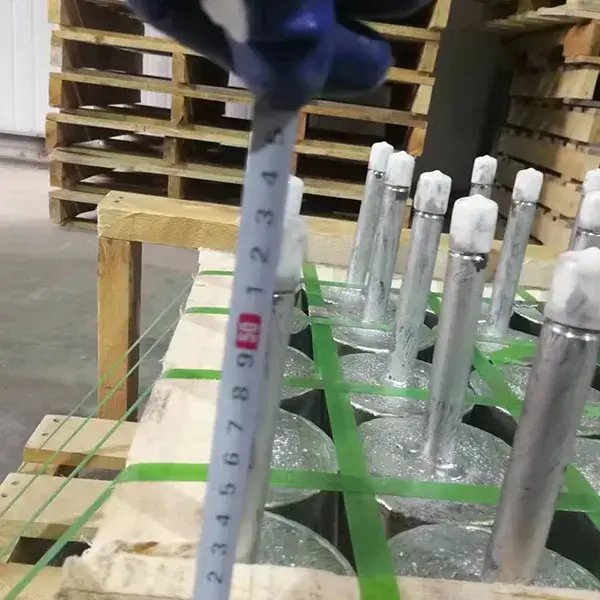
2.Uneven bottom or deformed steel shell
Issue: An uneven ladle bottom causes cracking at the base of the purging plug well block, leading to steel leakage. Installing a purging plug onto a severely deformed backing plate creates a risk of bottom cracking and subsequent steel leakage.
Causes: While most steel plants install the well block directly onto the steel shell, some apply a leveling material first. Others, dealing with oversized openings, use a 10mm-thick steel plate as a shim before installation. In plants where the steel shell has exceeded its service life, the bottom plate or backing plate has often become deformed and uneven due to high temperatures and impacts from ladle dismantling equipment; consequently, the well block makes only point contact with the steel shell, causing it to wobble. An uneven base effectively creates a localized pivot point, making the well block prone to cracking under the influence of thermal shock and the hydrostatic pressure of the molten steel.
Solution: Use chrome-corundum refractory mortar to level the area beneath the purging plug well block during installation, and promptly replace any severely deformed backing plates.
3.Improper replacement method
Issue: Internal cracks develop in split-type porous plugs, and the plug core detaches during service, leading to steel leakage.
Cause: When replacing porous plugs, some steel plants use a steel rod inserted from the ladle opening to manually knock the plug core loose. This procedure inevitably results in impacts against the surface of the well block. Since the well block has low structural strength at high temperatures, such impacts can damage the surface or cause cracks; as these cracks propagate during subsequent use, steel leakage occurs.
Solution: Modify the replacement procedure by using a pulling mechanism to extract the spent plug. This approach prevents the aforementioned damage and reduces the physical strain on workers. Currently, an increasing number of domestic and international customers are adopting pulling mechanisms for porous plug replacement.
4.Self-leveling material for expansion joints is not resistant to scouring
Issue: The joint-filling material in the gap surrounding the purging plug block erodes too rapidly, leaving the block exposed and causing it to crack.
Cause: To facilitate the replacement of the purging plug block, a gap of 40–100 mm is typically designed between the block and the ladle bottom bricks; this space is sealed using castable or ramming material. Poor-quality filling material can compromise the performance of the purging plug and, in severe cases, lead to steel breakouts.
Solution: Use high-quality self-flowing material. Corundum-based self-flowing material is currently the standard choice for joint filling both domestically and internationally; it has been adopted by most manufacturers due to its excellent flowability, ease of installation, and erosion resistance.
With the rapid advancement of iron and steel smelting technology, the ladle refining process has become a crucial component of steel production. The proper use of porous plugs is essential for ensuring operational safety. During use, potential hazards must be promptly identified, and appropriate improvement measures selected based on the specific nature of any damage, so as to prevent accidents involving molten steel leakage.
