
Steel ladles are crucial equipment in the steelmaking process. Modern industry demands increasingly higher quality steel, with a growing need for low-carbon and ultra-low-carbon pure steel. Converter steelmaking often cannot meet these requirements, necessitating ladle refining to reduce the carbon content and other impurities in the molten steel. This places higher demands on steel ladles. Traditional ladle refractory materials either fail to meet these requirements or have very short service lives, lacking cost competitiveness. Therefore, developing efficient and long-life ladle refractory materials is an inevitable trend.
The main factor affecting the service life of steel ladles is the damage to the refractory material, caused by chemical corrosion and spalling and cracking due to thermomechanical stress. In addition, the material composition and dimensions, the masonry structure, the size of expansion joints, and refining conditions are also important factors affecting service life. Currently, the main obstacles to the development of ladle refractory materials in my country are the short service life of ladles and the problem of slag adhesion to the ladle walls. Currently, the working lining of the ladle mainly uses magnesia-carbon bricks, alumina-magnesia-carbon bricks, magnesia-alumina spinel monolithic castables or precast blocks, while the slag line uses low-carbon magnesia-carbon bricks or low-carbon alumina-magnesia-carbon bricks. The ladle bottom uses magnesia-carbon bricks or high-alumina castables, etc. The ladle life is generally around 100 heats, with a very few steel mills reaching 150-180 heats. In comparison, the ladle life in Japan is generally around 250 cycles.
Slag adhesion to ladles is a common problem in Chinese steel plants, primarily influenced by the composition of the slag and the material of the refractory materials. Furthermore, steelmaking processes and operational factors can exacerbate slag adhesion. Measures to prevent slag adhesion include: 1) increasing the hot turnover rate of ladles and reducing the number of ladles used; 2) strengthening ladle maintenance, promptly cleaning slag buildup along the ladle rim to prevent incomplete slag removal after rim formation, and repairing any significant melting or spalling on the ladle wall to prevent slag and molten steel from seeping in and worsening adhesion; 3) removing slag as soon as possible after casting, strengthening the production organization of the furnace crane, and reducing the time between casting and ladle turning to avoid slag adhesion; 4) improving the slag-blocking operation at the converter tapping point to reduce converter slag entering the ladle and furnace. 5) Add lime during refining to ensure complete melting of ladle slag; control the number of ladles in use to reduce waiting time; heat ladles before steelmaking; use ladle covers during use; use a heat-insulating layer for the permanent ladle layer; use low-thermal-conductivity refractory materials for the ladle walls; 6) Regarding refractory materials, improve masonry quality, control brick joint dimensions, reduce thermal stress in the lining, improve thermal shock resistance, and reduce cracking; 7) Use effective ladle covering agents: improve the spreadability of the ladle covering agent to enhance its insulation performance, reduce the SiO2 content in the covering agent, reduce its viscosity, and reduce slag adhesion to the ladle.
To solve these problems, a narrow focus on controlling the cost per ton of refractory materials is insufficient. Refractory material suppliers and steel companies need to jointly explore solutions, aiming to achieve the lowest possible cost through a broader approach to controlling the cost per ton of refractory materials.
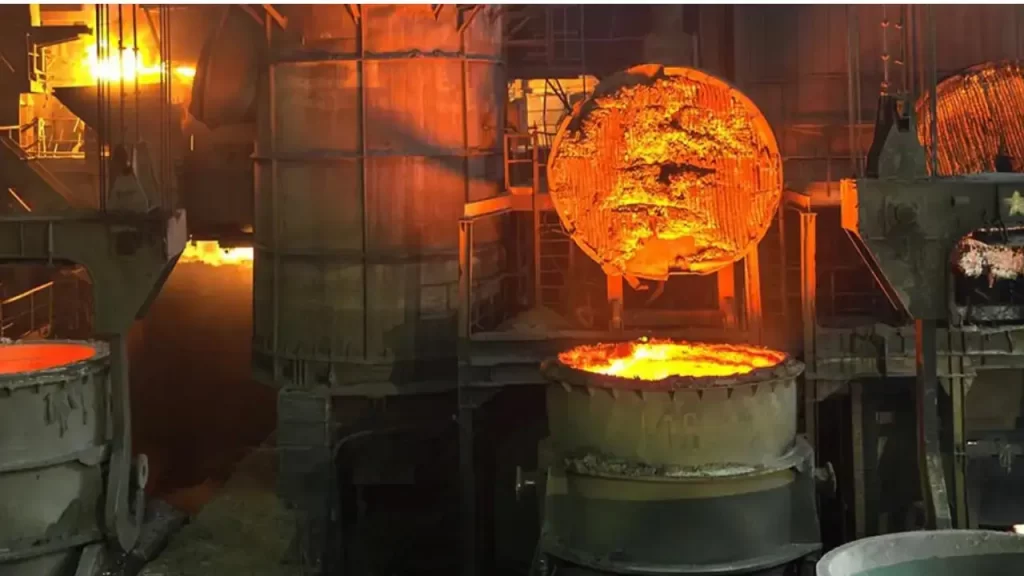
Practical applications show that reducing refractory material consumption per ton of steel has profound and sometimes indispensable significance for the production of clean steel, the reduction of tapping temperature, and energy conservation. For example, the production of clean steel is the dominant concept in modern steelmaking. Clean steel typically refers to high-quality steel with very low levels of harmful components (S, P, O, H, N), minimal non-metallic inclusions (both small in number and size, with controlled morphology), and precise and uniform distribution of alloying elements. High refractory material consumption per ton of steel results in more refractory material entering the molten steel, generally through melting and spalling. Melting often increases carbon (C) and oxygen (O), and produces smaller non-metallic inclusions, while spalling often produces larger non-metallic inclusions. Smaller non-metallic inclusions (≤50ppm) are difficult to remove using existing smelting processes; therefore, low-consumption refractory materials are essential for clean steel production. Simultaneously, low refractory material consumption per ton of steel ladle indicates a high ladle heat turnover rate, less cold ladle tapping, and a lower average tapping temperature in the converter. This means reduced consumption of oxygen, alloys, etc. Typically, a 1°C reduction in tapping temperature lowers the cost per ton of steel by 1 yuan, and a lower tapping temperature is also beneficial to billet quality.
Based on the above, the ideal configuration for ladle refractory materials should be: a 30 mm thick insulation layer on the ladle wall, an 80-100 mm thick integral castable layer, and a 180-210 mm thick integral castable layer for the working layer; low-carbon magnesia-carbon bricks for the slag line, 180-230 mm thick; and integral casting for the ladle bottom. The appropriate integral lining thickness should be selected based on the ladle size. Drawing on the management experience of advanced foreign counterparts and considering the actual use of permeable bricks in my country, the repair model shown in Table 1 is formulated. At the same time, continued research and development of integral castable refractory materials and application technologies for ladles should be strengthened. The following two points are particularly important:
(1) Develop effective repair techniques to locally repair worn parts of the lining, rather than replacing the entire lining with durable materials. This technique ensures uniform lining wear during furnace service and minimizes residual refractory material.
(2) Develop continuous pouring repair technology to continuously construct the lining without discarding the original residual refractory material.
More details about ladle furnace
What is a ladle furnace?
Ladle furnace (LF), also known as a ladle refining furnace, is a secondary steelmaking unit used to refine and fine-tune molten steel after it leaves the primary melting furnace. It uses graphite electrodes and electric arcs to reheat the metal, allowing for precise temperature control, chemical adjustments, and the removal of impurities.
What is the difference between ladle furnace and electric arc furnace?
Both ladle furnaces and electric arc furnaces are essential throughout the steelmaking process despite the fact that they have different roles. While the ladle furnace’s function improves the quality of the molten steel, the electric arc furnace process, on the other hand, is aimed at the raw material’s first melting.
What is a twin ladle furnace?
Ladle furnace arrangements include single stations with fixed or swiveling gantries, ladle cars, turrets, and twin stations with two roofs and one swiveling electrode gantry. The compact design is tailored to meet customer needs, offering high heating rates and low electrode consumption.
What is ladle furnace slag used for?
Ladle furnace slag – also called ‘white slag’ due to its high content in calcium oxide – can be successfully recycled as a flux in secondary steelmaking, or routed to other industries (i.e. cement) as raw material. Despite its potentiality, the valorization of LF slag is difficult due to the disintegration phenomenon.
