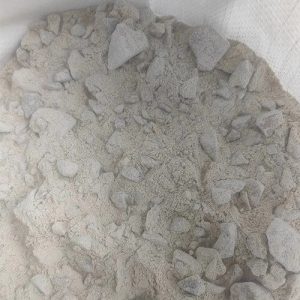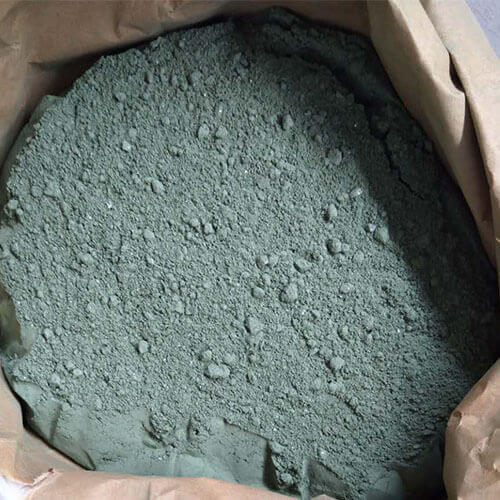
Neutral ramming mass is able to resist penetration & protrusion of cracks & pores into the refraction lining, thus providing safety from penetration of molten steel towards the heat sensitive crucible & neutral lining for induction furnace also ensures easy removal while replacing the lining.
Neutral ramming mass (NRM) is a refractory ramming mass primarily based on high-alumina raw materials. Compared to traditional acidic (silica-based) ramming mass, it offers higher operating temperatures, longer furnace life, and a safer operating environment. It is suitable for a variety of smelting raw materials and operating conditions, including direct smelting (DRI) (pellets, lumps, and powders), various scrap steels, direct smelting of stainless steel and specialty alloys, and coreless induction furnaces of multiple capacities. NRM, primarily composed of alumina (Al₂O₃), mullite (3Al₂O₃·2SiO₂), and fused corundum, exhibits excellent chemical neutrality and maintains stability in both acidic and alkaline slag environments. Excellent high temperature resistance (maximum operating temperature can reach 1750℃), acid and alkali corrosion resistance, suitable for a variety of metal smelting, good volume stability, not easy to expand or shrink, low apparent porosity, effectively prevents molten steel penetration, anti-scouring, wear resistance, and extends the life of the furnace lining.
Neutral Ramming Mass Advantages:
- Superior uniform heat stability
- Ability to withstand corrosive-erosive attack of molten metals and their acids
- Excellent volume stability
- Superior structure heat stability
- Low apparent porosity
- Strong abrasion resistance Matrix
Neutral Ramming Mass (NRM) is formulated from high-purity raw materials to deliver exceptional corrosion and erosion resistance. It is primarily used for lining induction furnaces, enabling smooth melting operations, reduced power consumption, and extended furnace life. Also referred to as a green refractory, NRM helps reduce pollution compared to traditional Silica Ramming Mass, lowering CO₂ emissions by up to 5% while maintaining superior performance.