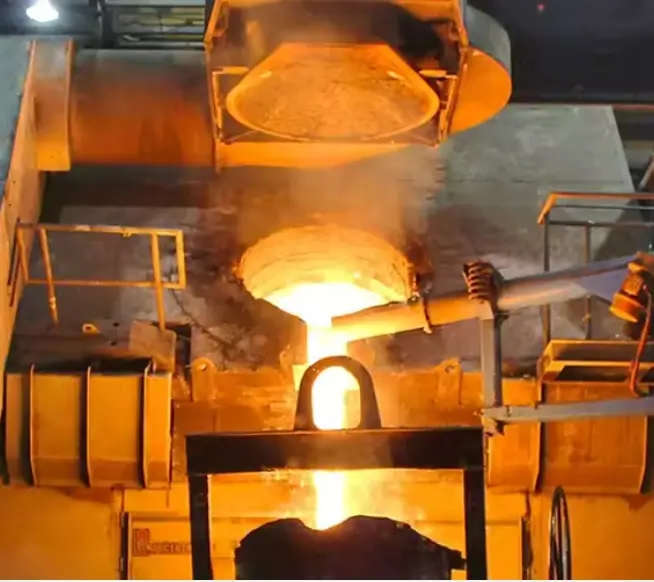
Refractory ramming mix is an unshaped refractory material that is constructed by ramming. The raw materials used in ramming mix and refractory castable are partially the same, but the density of ramming mix is relatively lower than that of castable, and less water is added during construction.
Refractory ramming mix is formulated from granular materials, binders, and other components, and is primarily applied through forceful ramming. Ramming mixes can also be made into composite types, using silicon carbide, graphite, and electrically calcined anthracite as raw materials. Similar to castables, they employ micronization technology, incorporating fused cement or composite resin as a binder to form a loose material. Generally, it is used to fill gaps between furnace cooling equipment and masonry, or as a filler in masonry leveling layers.
The ramming mix exhibits good chemical stability, resistance to erosion, abrasion, spalling, and thermal shock. Linings made from refractory ramming mixes have low moisture content, are densely packed, and outperform refractory castables of the same material. For acidic ramming mixes, binders such as sodium silicate, ethyl silicate, and silica gel are used; dry ramming mixes use borates, while basic ramming mixes commonly use magnesium chlorides and sulfates.
After refractory ramming is rammed and hardened to a certain strength, it can be demolded and baked. For those containing thermoplastic carbon binders, they can be demolded after cooling to a certain strength, or they can be sintered with the mold on after cooling.
The advantage of refractory ramming mix is that it can be applied on-site using a ramming method, with equipment such as pneumatic hammers or mechanical ramming. For smaller quantities or less critical areas, it can also be tied manually. However, the disadvantages of refractory ramming mix are that it is not as fast to apply as refractory castable, and the labor intensity is higher than that of castable.
What is a ramming mass?
Ramming mass is a pre-blended Dry vibratables refractory made from a selected mix of SILICA GRAINS. This blend of grains along with a binder, BORIC ACID forms the working lining in an Induction furnace used for melting steel.
What is the process of ramming?
Ramming is the process of densely packing loose, dry refractory grains into the furnace lining, using either hand tools or powered equipment, to form a firm and even layer.
What is the use of ramming mass premix?
Premix Ramming Mass is also suitable for high-temperature process equipment such as cement kilns, glass furnaces, ceramic kilns, and environmentally friendly incinerators. It can withstand extreme temperatures and corrosive gases, providing stable protection and thermal insulation for the furnace.
What is the ramming mass of an induction furnace?
Ramming mass is a type of unshaped refractory material used to line the inner walls of induction furnaces, ladles, and other high-temperature processing units. It is usually made from crushed quartz (silica), magnesite, or alumina, depending on the intended use and furnace type.
How many types of ramming mass are there?
There are three types of ramming masses namely (i) acidic, (ii) basic, and (iii) neutral. If the slag contains high amount of acidic components then a silica (SiO2) lining is used. For slags with a high basicity index, magnesite (MgO) linings are the choice.
What are the different types of ramming?
The types of ramming materials can be divided into carbon ramming materials, silica ramming materials, corundum ramming materials, magnesia ramming materials, and medium-frequency furnace ramming materials.